// Cladding Systems
Aluminum Wall Cladding
Aluminum wall cladding systems for commercial and residential exteriors. Rainscreen principles, concealed fixings, and long-service factory finishes.
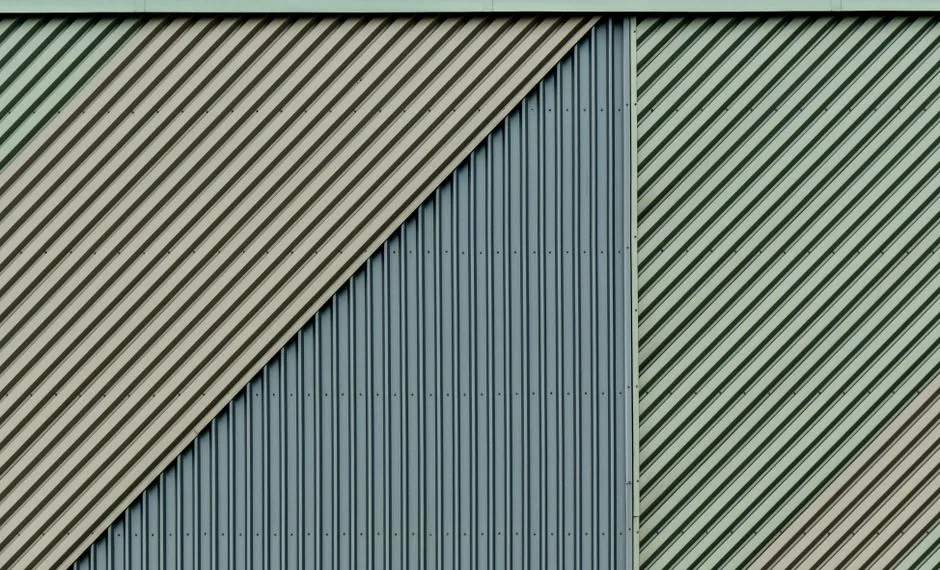
Aluminum wall cladding: an overview
Aluminum wall cladding is the layer of metal panels or profiles that covers and protects a building’s exterior walls. Unlike structural materials that carry load, cladding is part of the building envelope - the assembly that controls the passage of heat, air, vapor, and water between inside and outside. Aluminum has been used in this role for decades on commercial buildings and is now standard in mid-rise residential and institutional construction as well.
The case for aluminum wall cladding rests on a straightforward performance argument: the material does not corrode under normal atmospheric conditions, does not absorb water, does not support biological growth, and maintains its dimensional stability across a wide temperature range. When paired with a quality factory finish, the exterior surface needs no maintenance beyond periodic washing throughout the expected life of the building.
How a rainscreen wall assembly works
Most aluminum wall cladding installations follow the rainscreen principle. The panels form the outer rain-shedding face, but a deliberate drainage and ventilation gap is maintained between the back of the panels and the air-barrier membrane on the wall behind. This gap serves two purposes.
First, it equalizes pressure across the outer face, eliminating the driving force that would otherwise push rain through joints and into the wall. Water that does enter the cavity drains down and out through weep paths at the base of the assembly.
Second, the cavity allows vapor that diffuses from the interior to escape outward rather than condensing within the wall structure. This is particularly important in mixed climates where temperature differentials create significant vapor pressure differences between seasons.
The subframe that holds the panels at the required standoff distance also provides the level reference for the cladding face. Subframe anchors can be shimmed independently to achieve a plumb, flat panel plane over a substrate that may have significant tolerance variation.
Profiles and cladding patterns
Aluminum wall cladding is available in several profile forms, each producing a different visual character and weather performance.
Flat panels present a flush face from edge to edge. Joints between panels are expressed as clean shadow lines. The format reads as contemporary and is widely used on commercial and institutional buildings.
Horizontal siding profiles interlock along the horizontal joint, producing a shiplap or clapboard appearance. The interlock conceals the fastening clip and provides a positive drainage path along the joint face.
Vertical rib and groove profiles run floor to floor or soffit to sill, providing strong vertical emphasis. Ribbed profiles also add panel stiffness, permitting greater spans between subframe supports.
Custom and textured finishes - embossed wood grain, stone texture, or brushed metallic - are available from most manufacturers and expand the design palette beyond the default flat-metal aesthetic.
Specifying finishes
The finish coating determines both the color and the long-term appearance of the cladding. For commercial projects in the United States, two coating standards are commonly referenced:
AAMA 2604 is a mid-performance coating standard covering high-performance organic coatings applied at a minimum dry film thickness of 25 microns. Products meeting AAMA 2604 are commonly backed by warranties on the order of 5 years against chalking, fading, and adhesion loss - though warranty terms are set by the coating supplier, not mandated by the standard itself. This is an appropriate specification for moderate-exposure commercial facades.
AAMA 2605 is the premium tier, typically a 70-percent PVDF resin system, and is commonly associated with 10-year color and chalk warranties in the coatings industry. As with AAMA 2604, the standard defines performance testing requirements; the warranty is an industry convention offered by compliant coating suppliers. It is specified for high-rise buildings, coastal sites, industrial environments, and any project where long-term color stability is a design or maintenance requirement.
Anodized finishes penetrate the aluminum surface chemically and provide a hard, metallic appearance with excellent abrasion resistance. Class I anodize (minimum 18-micron oxide thickness) is the exterior standard.
Installation considerations
Subframe layout begins with a survey of the substrate and a layout for anchor locations. Primary anchors penetrate through the insulation layer and engage the structural wall or framing behind. The subframe extrusions are leveled and plumbed before any panels are installed.
Thermal breaks between the aluminum subframe and the structural anchor prevent condensation on the interior face of the anchor. In commercial construction, where continuous insulation is required by most energy codes, the subframe design must accommodate the insulation depth while maintaining the required standoff for the panel system.
Expansion gaps at panel terminations - at floor lines, building corners, and penetrations - allow the aluminum to move thermally without inducing stress in the clip connections or adjacent panels.
Service life and end-of-life recycling
A properly installed aluminum cladding system with a quality PVDF finish is generally expected to perform without major remediation for 40 or more years. At end of life, aluminum is one of the most recyclable construction materials in common use: it can be melted and recast without loss of alloy properties, and the secondary production energy is a fraction of that required for primary production from bauxite.
// Keep exploring
More facade systems
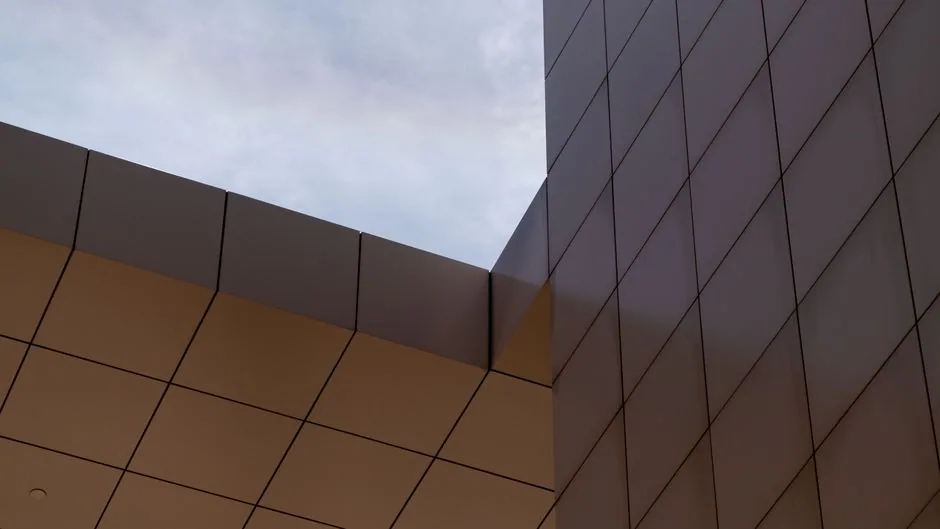
Aluminum Soffits
Durable, low-maintenance aluminum soffits for residential overhangs, commercial canopies, and covered walkways. Weather-resistant profiles with a clean factory finish.
View product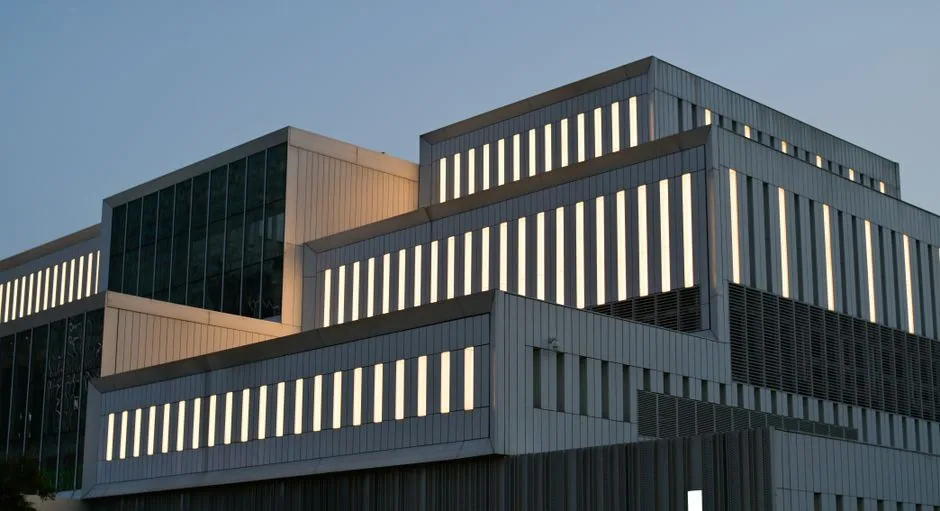
Aluminum Panels for Facades
Extruded and formed aluminum cladding panels for rainscreen facades, curtain walls, and commercial building envelopes. Available in a wide range of profiles and finishes.
View product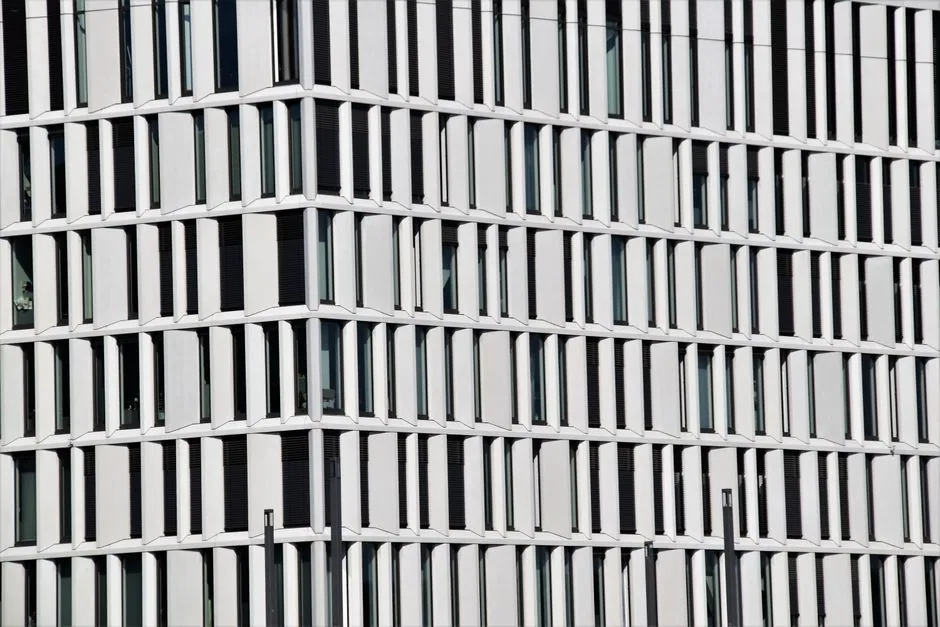
Aluminum Battens
Linear aluminum batten profiles for ventilated facades, feature walls, and architectural screening. Consistent spacing, clean sightlines, and durable factory finishes.
View product
// Start a project
Spec aluminum wall cladding on your project
Tell us about your facade and we'll help with sizing, finish, and detailing.